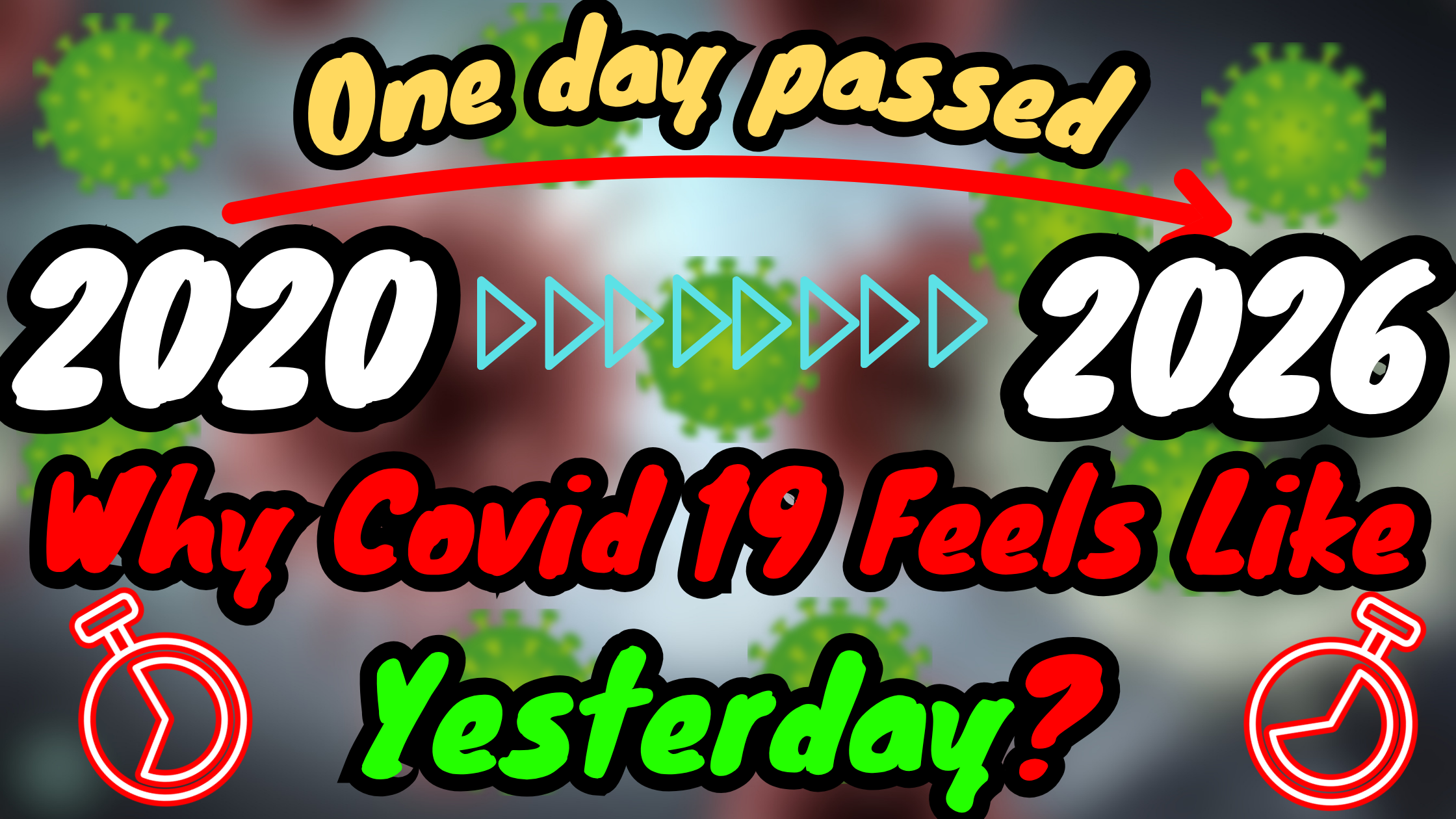
It’s hard to believe, but it has been almost six years since the world went into lockdown. I still vividly remember the early news reports calling it the “Coronavirus” before the WHO officially renamed it COVID-19.
Earlier on this blog, I shared my thoughts on a daily prompt about how I adjusted my life during the COVID-19 pandemic. While reflecting on those changes, I started wondering why that entire era still feels like it happened just last week, even though half a decade has passed. After doing some research and looking back at my own experiences, here are the five reasons why our perception of time feels so warped:
1. The Lockdown Loop (Repetitive Routines)
The primary reason is the cycle of extreme repetition. The lockdown forced us into a lifestyle where everyone was stuck at home or working remotely. When your routine becomes that repetitive, your brain stops registering “new” memories from day to day. This lack of variety results in a blurry perception of time, where weeks feel like days.
2. Time Compression (The Prison Effect)
When your environment stays identical every single day, time begins to “compress.” Think of it like a prisoner’s perspective: when every day is a carbon copy of the last, the months blend into a single unit. To our minds, a thousand repetitive days can feel as fleeting as a single afternoon because there was nothing distinct to separate one Monday from the next.
3. Eyes Glued to the Screen
With nothing to do during the lockdown, most of us were glued to our screens. We saw a massive rise in streaming services like Netflix and Disney+ (I was definitely one of those who subscribed to both!). Because we spent so much time consuming content in the same spot, our brains struggled to differentiate between events. When the “background” of every memory is just you sitting in your room, the timeline becomes a blur.
4. The Missing Milestones
Human memory relies on “milestones” to measure the passing of time. Events like weddings, holiday trips, festivals, and even office parties act as markers on our life’s timeline. During the lockdown, these milestones were non-existent. Without these markers to define the transition from one year to another, our internal clock lost its sense of direction.
5. The Post-Pandemic Rush
Once the world finally re-opened, we all rushed to do everything we had missed out on-traveling, partying, and gathering again. This sudden burst of activity has blurred the years between “then” and “now.” It makes the entire pandemic feel like a brief timelapse or a short interruption, rather than the multi-year ordeal it actually was.
The pandemic didn’t just change the world; it changed the way we experience time itself. Even though the calendar says years have passed, our minds are still catching up to the reality of how much time we’ve truly traveled.
What about you? Does 2020 feel like a lifetime ago, or does it feel like it was just last week? Let me know your thoughts in the comments!